Constellations of Calcium
by Gio Clairval
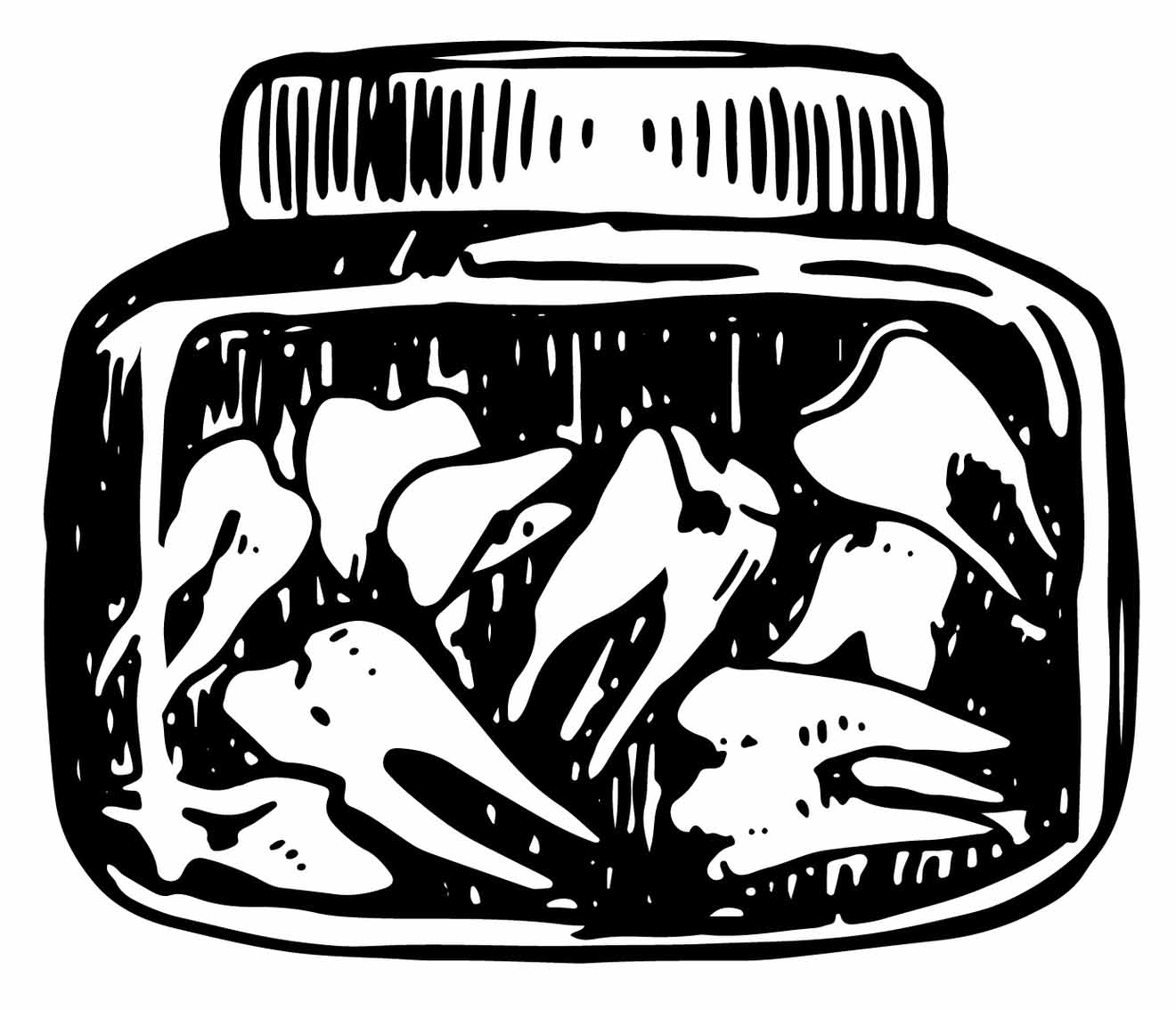
My mother left me three things: a jar of her teeth, a locked box labeled “For the Girl,” and an aversion to touch.
The teeth, I fed to the lake. The water took them like a blessing or a threat. They sank like thirty-two pale constellations of calcium and memory. I watched them spiral through the green-black water, trailing filaments of something iridescent—perhaps nerve endings that never died, or perhaps just the last light catching on enamel worn smooth by years of secrets.
The lake accepted them. Its surface tensed briefly like skin anticipating pain, then relaxed into ripples that erased themselves.
The box, I buried.
But not deep enough. Some nights, it moans. Last week, the neighbor’s cat brought me its key, slick with something pink and coiled.
The box has been calling since. The key is warm to the touch, unlike any metal I know. It pulses with a deep heartbeat, then speeds up until I freeze it just to sleep. Even there, it needles the air with a high, silvery whine, and ice crystals form patterns of human fingerprints.
So I dig it back up. I haven’t opened it. Not yet. The aversion? That grew legs.
Now, it walks beside me, handless, faceless, but persistent. It hisses if someone brushes against me on the train. It vomits when a cashier’s fingers graze mine, giving change. It sleeps on my chest like a house tiger and fills my lungs with powdered glass.
My skin has learned to flinch before contact even occurs, an inner prescience that maps the approaching heat of another body. People see it happen—my involuntary retreat—and their eyes fill with questions, but their mouths say nothing.
My lovers never last.
They say I’m too cold, too sharp, like I was broken and didn’t notice.
One tried to stay. Said he liked puzzles. I watched him curl around the locked box, murmuring to it, until he stopped talking altogether and started drawing his dreams in salt on the bathroom tiles. Precise geometries of bone and hollow labyrinths. His fingers became white with crystal dust, and his breath smelled of water depths where light curls into black. He traced the contours of my face while I slept, leaving saline maps that burned my skin by morning.
He left, eyes unfocused. Didn’t even take his shoes.
I put them in the box. It giggled. Bubbles rising through molasses, viscous and sweet and terrible. The box swallowed the shoes, leather folding in on itself until nothing remained but the memory of footsteps retreating down my hallway.
Sometimes I think of digging up my mother.
Just to ask. How she fed her silence to the box. How she peeled off her want and taught it to bite. I imagine her bones would be beautiful now, polished by time and earth into dusty amber.
Once, I dreamed I opened it. Inside: a mirror with a mouth. It said my name wrong. It said Come here, child. Let me show you what lives in your marrow. Its voice was the sound of fingernails growing in the dark, the minute cracking of cells dividing without permission.
I woke up bleeding from both ears, and something small had chewed through my pillow. Feathers scattered across my bed like snow, each barb tipped with a perfect crimson drop that refused to dry.
Maybe it’s time.
Maybe I open the box and swallow what’s inside.
Maybe it swallows me back.
The key fits perfectly against my tongue, metallic and alive. It tastes of salt and copper and hunger. My mother’s legacy waits, patient as only the terrible fragments can be.
My fingers find the lock. The aversion coils around my wrist, constricting until my hand blooms purple with trapped blood, but it cannot stop what was always meant to be. Some inheritances cannot be refused.
I turn the key inside me. Something turns in answer.

 The Molotov Cocktail