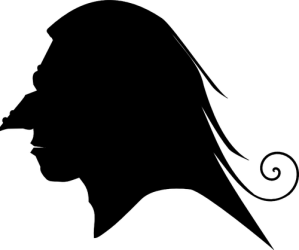
 Hag-Ridden
by Donna L. Greenwood
Her breath is a grave. Skin-rotted and slack-jawed, she holds out her stumped hands, pleads with us, bleeds tears, flaps open her slavering mouth. We walk past her laughing. My sisters piss on their apple cores and throw them to the old woman. We watch her scrabble in the mud for the food. She eats the soiled apples slowly, eyes hollow and deep as hell. She snaps her head sideways and looks directly at me and, in a voice like hot wind on dry grass, she whispers ‘I have sisters too.’
Still virgins but not for long, my sisters will be wed by the end of the year. Already there has been a pairing off with the village boys: Jenny with Tom, Louise with John Junior, Beth with the horse-boy from down the lane. But no one will pair with me. Maybe it is my interest in herbs or my skill in slaughtering pigs, but I will be one of the lost women, left without a man. My pretty sisters already grow weary of me, snapping at my clumsiness, snarling at my inability to wear a dress well. If they abandon me, I will have no choice but to join the shunned ones of the village.
After the hag, my sisters are haunted: waking in the night, shock-headed and howling. Other women, beautiful like my sisters, scream in unison over dreams they can’t remember. I lie in bed with my mouth wide and round, forcing the tears to flow. My sisters huddle around me, believing that I am as terrified as they are. But I am not, I remember my dreams: they are hag-ridden.
When the moon is full and cast in blood, the hag and her sisters come for the women. Some have feet like chickens, some have heads like goats, others are naked with skin like snakes and mouths like crocodiles. They come for the beautiful women and all who could be beautiful one day. Stamping and steaming, they swaddle the village, their green lunar eyes penetrating the dark and seeking those who taunted their eldest sister. Their twisted hosannas ring out in the streets as the women run and the men stand to fight.
I hide but I needn’t have been afraid, the hags are not interested in me: I am marked by difference. From behind the cupboard, I watch them cleave my sisters in two. I watch them rip out the lungs of my mother and grandmother and pull out the eyes of our pretty girl-servant. They march through the village and string up the guts of the beautiful over doorways and windows: a warning to any who might think that beauty hides the warts of the soul. The men pull themselves apart and swear vengeance, but I do not go to them. The scent of blood and befouled skin has quickened my breath. I cannot stop watching the killing.
In this small village, I have had to be brave, but I no longer want to hide. I climb out from behind the cupboard and walk into the street. I stand with the malformed old women. Their heads are alight, and their hands are flames. They aim their fire at the village, and I do nothing as they torch my home. I stand by and let them burn the men.
The old women grab me and gather me in. They reach inside my skin and turn me inside out. They burrow deeper and deeper into me until I am dead, and, inside my death, I see my true self. I stand outside myself and see my own green eyes staring back at me. A former shadow, I am now sharp-toothed and long-breasted, and I am not alone. There is movement among the pretty corpses. I see others walking towards me through the red fog of violence – the outcasts, the lonely, the old and the plain-faced – moving forwards, blinking like newborns, hands and chests covered in the blood and entrails of their kin. I search for the hags, but they are gone. In their places are bent, misshapen trees stooping over the dead. From beneath the fumy clouds, the moon cracks open the darkness and reveals what we have done.

 The Molotov Cocktail