 SS Moss on the Garden Planet
by Aza Smith
The SS Moss crashed landed on an uncharted planet in the Umbral Spiral. The entire system was riddled with asteroid fields, and we found ourselves knocked into its orbit. The crew died on impact, but I survived. Processing power on the ship is low, and there is no reception. It can’t tell me where I am, much less broadcast a distress beacon. The planet is conducive to life. While the area lacks civilization, the biodiversity is apparent: lush like the Amazon rainforest. Scans from my pressurized suit find the planet’s oxygen content exceeds Earth’s, and I can’t go very long without it before suffering hyperoxia. Rations are limited. In an unfamiliar environment such as this, I have to presume all inherent danger. Liftoff is out of the question, but I’ll need the ship operational if I’m to survive before help arrives.
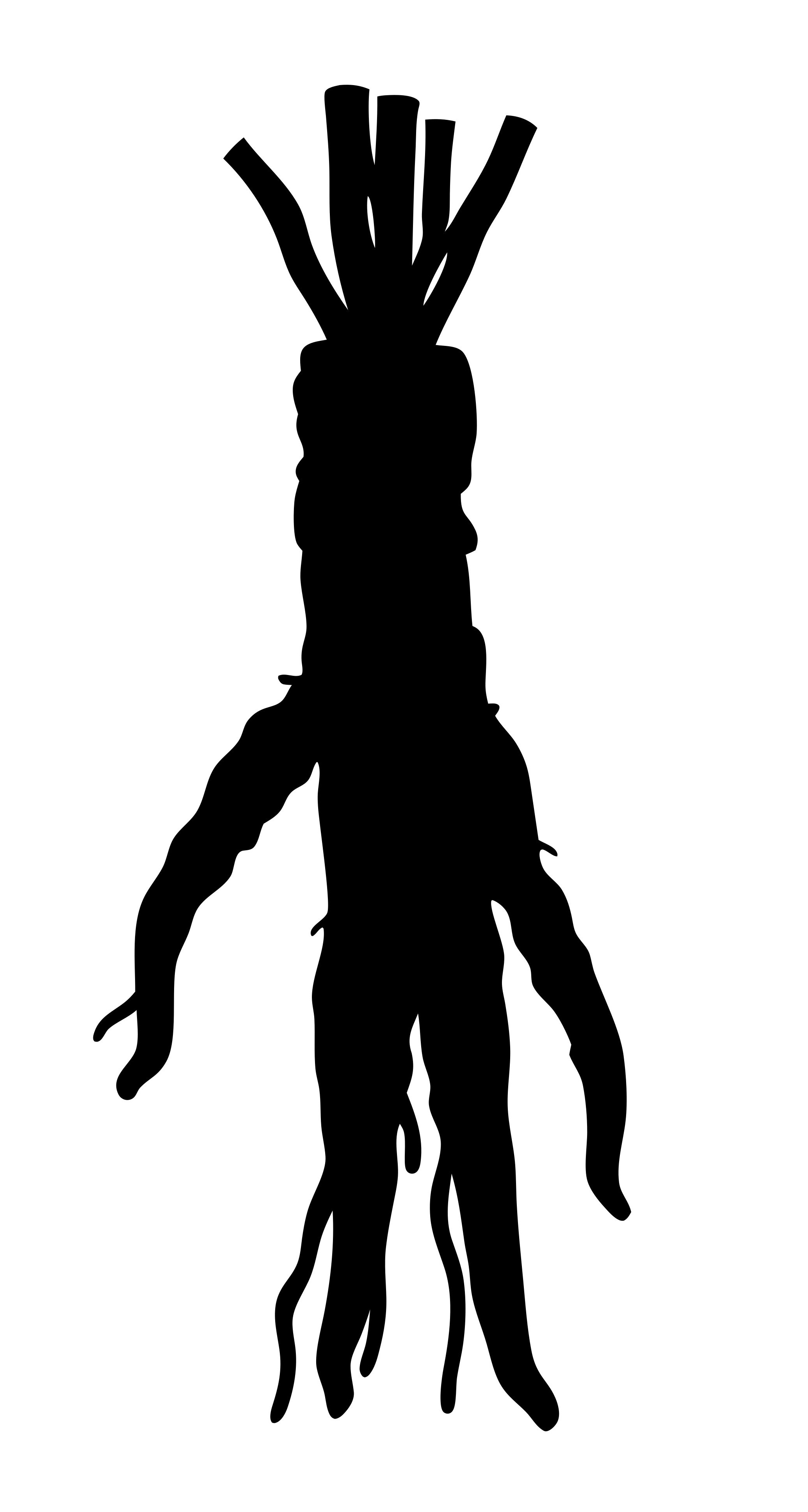
In my attempts at foraging for supplies, I have encountered a curious species that blurs the line between plant and animal. Confusing it for a root vegetable, I yanked it from the ground. Small and humanoid, the creature is neither willing to flee, nor is it aggressive. I found a small patch’s worth and now I have over a dozen of them following me around, gregarious as they are.
An animal, a colossal toad-like beast with warning coloration, had found its way into the crash site. I used the open cavity of a tree behind a bark barricade as a hiding spot. The root-people followed me for safety. One particular root-man, small, purple, carrot-like, could not escape in time. The monster had swallowed it whole before it leapt from the crash site for more prey.
The roots can perform complex tasks and learn through observation. As I was rewiring the ship’s mainframe, a trio of roots would carry around my tools and hand them to me when I reached for them. Later, I would see a group of roots gathering rocks, moss, and leaves from the area, staging a small effigy of the SS Moss out of rocks and twigs. Adorable, and fascinating. I might bring a few of them with me if help ever arrives.
With the ship’s emergency solar panels, I managed to jury rig a few systems and now the scanners are operational. I was looking forward to satiating my hunger on the various berries and mushrooms the roots had brought me, only to find out they weren’t safe to eat. The water filtration device works, so I won’t die of dehydration, but I won’t survive long without food.
I see the roots running around in batches, inspecting random objects, broken and unbroken from the wreckage. While documenting my findings to the onboard computer for posterity, I had placed one of the curious critters into the ship’s scanners and found that, barring a few unregistered periodic elements in their genetic makeup, they were the least toxic thing on this planet. I used a shard of tungsten from the ship as a makeshift knife, but all attempts at hunting have been abject failures. I’ve yet to find any animals smaller than myself other than the roots, the wildlife too fast or too aggressive to risk damaging my suit.
I lucked out and discovered a giant frog. It lay there on its back, wheezing as it tried to breathe. Not entirely for altruistic reasons, I saw an opportunity and put it out of its misery. Processing the corpse was trickier than first assumed, my knife continuously hitting something. At first I thought it was a bone, before realizing it was actually some kind of blockage in its cardiovascular system. I can only assume this was what killed the creature. It could have been a disease common to this species, causing calcification in its blood into a hard purple mass. Without concrete data, prudence was my protector. Bringing samples back, I had learned that the frog’s flesh was indeed too toxic for consumption.
It was at the two week point when I was forced to eat some of my companions. I took no time to prepare or cook them, grabbing a few and biting into them raw. They squirmed and squealed as I did so, but I powered through. It was like biting into an onion, my calculated desperation lingering on the tongue. What made it sting all the worse was that the other roots just stood there as I did it. They made no effort to save their comrades or themselves.
Perhaps I overestimated the roots’ intelligence. I’ve been eating them almost every day, and none of them seem concerned. They’re like dodo birds seeing a human for the first time. They act without a care in the world as I eat them each day. Until I can find a better alternative, it will have to do.
Thirst. Vomiting. Fatigue. Chest pains. I’ve been recording and broadcasting my SOS beacon, and have been spending every minute since trying to boost the beacon’s reach and volume. I may have caught something in my time here. I was washing my face and coughed up small, fine hairs. The scanners told me they were fibrous roots. Five days later and the sweating was unbearable, so I figured a few minutes out of the suit wouldn’t do me any harm. My veins were visible through my arms and legs. Throbs blossomed into migraines. I hoped to sleep it off. The roots all stood there around the bed. Aggressive mimicry. They were more cunning than I gave them credit for.
Paralysis. Muscle fibers frozen. As though armature held me in place. My jaw is stiff. I can’t even move my head to see the full extent of what is happening to me. I can feel things crawling under my skin. Sprouting from welts. Bed sores blossoming. The roots never leave my side. I can feel something in my throat. In my chest. My head. Something entered the planet’s orbit. I felt the crash, even from here, but that doesn’t matter now.
Not anymore.